In the modern digital landscape, traditional outbound advertising—such as cold calls, intrusive pop-ups, and disruptive radio ads—is becoming increasingly ineffective. Consumers today demand value, trust, and authentic engagement before committing to a purchase. Whether you are running a growing service agency in Lahore or expanding an e-commerce platform across Pakistan, content marketing has established itself as the ultimate strategy for sustainable customer acquisition and brand equity.
Content marketing is not simply about posting articles or social media updates; it is a long-term, strategic approach centered on educating, entertaining, and solving real user problems. In this comprehensive 1,100+ word guide, we will explore what content marketing is, why it is essential for modern business expansion, and a step-by-step framework to execute a profitable content strategy.
What Is Content Marketing?
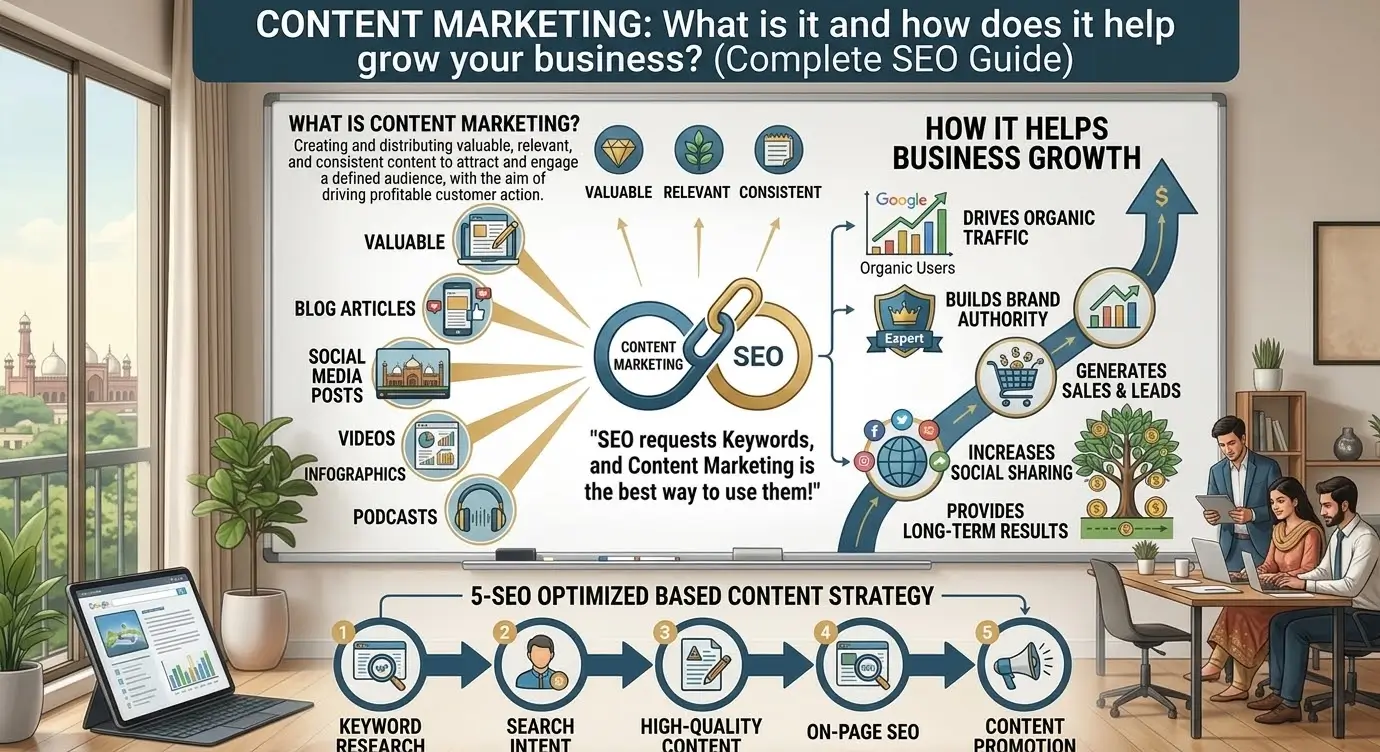
Content marketing is a strategic marketing methodology focused on creating and distributing valuable, relevant, and consistent content to attract and retain a clearly defined audience. Ultimately, the goal is to drive profitable customer action by establishing industry authority and thought leadership.
Unlike direct sales pitches, content marketing answers specific customer questions, addresses pain points, and provides actionable insights. When visitors find genuinely helpful information on your website, they begin to trust your brand—making them significantly more likely to hire your agency or purchase your products when they are ready to buy.
How Content Marketing Accelerates Business Growth
Implementing a structured content marketing framework delivers measurable commercial benefits across every stage of the sales funnel:
1. Drives Sustainable, Organic Search Traffic (SEO)
Search engines like Google prioritize websites that regularly produce comprehensive, high-quality content. By publishing optimized blog posts targeting specific user queries, your website ranks for valuable long-tail keywords, bringing a continuous stream of organic traffic without requiring continuous ad spend.
2. Builds Brand Trust and Domain Authority
Consumers naturally prefer doing business with industry experts. When your blog articles consistently solve customer problems, explain complex topics, and offer practical solutions, your domain builds authority—positioning your brand as a trusted industry leader.
3. Nurtures High-Quality Lead Generation
Educational content attracts visitors who are actively researching solutions. By offering downloadable lead magnets—such as free PDF guides, strategy templates, or e-books—you can convert anonymous site visitors into qualified email leads for ongoing nurturing campaigns.
4. Lower Customer Acquisition Cost (CAC)
While paid advertising campaigns stop generating leads the moment your budget runs out, optimized content assets remain live permanently. A well-written article published today can continue attracting new clients and generating inbound inquiries for years, significantly reducing overall customer acquisition costs.
At MadiGiServices, we design data-driven content marketing and organic growth strategies that turn information seekers into long-term commercial clients.
Core Types of Content Marketing Formats
To engage diverse audience segments effectively, leverage a balanced mix of content formats:
- Blog Articles & SEO Guides: Comprehensive written articles addressing industry trends, how-to solutions, and comparison guides that rank on Google search pages.
- Infographics & Visual Content: Visual charts, data diagrams, and process workflows that simplify complex topics and earn organic backlinks.
- Video Content: Short-form reels, product walkthroughs, and YouTube tutorials that capture viewer attention and build personal connections.
- Case Studies & Client Testimonials: Real-world proof showcasing how your products or services solved specific client problems and delivered measurable results.
Step-by-Step Guide to Building a Content Marketing Strategy
To ensure your content efforts translate directly into business revenues, follow this practical framework:
Step 1: Identify Your Target Audience Personas
Before writing a single word, define your ideal buyer persona. Understand their demographics, core challenges, goals, and search habits. Knowing what keeps your target customer up at night ensures your content resonates directly with their needs.
Step 2: Conduct Keyword Research and Intent Analysis
Use SEO tools like Ahrefs, SEMrush, or Google Keyword Planner to discover what terms your target customers enter into search engines. Focus on transactional and informational keywords with clear search intent, organizing them into thematic content clusters.
Step 3: Develop an Editorial Content Calendar
Consistency is key to content success. Create an editorial calendar outlining article titles, primary keywords, target audience segments, publishing schedules, and promotion channels to maintain steady publishing momentum.
Step 4: Craft Original, In-Depth Content
Write high-value articles that provide deeper insights than top-ranking competitors. Format your posts cleanly using heading tags (H1, H2, H3), bullet points, and high-quality graphics to elevate user experience and lower bounce rates.
Step 5: Promote Across Multiple Marketing Channels
Publishing your article is only half the battle. Distribute your content across social media platforms (LinkedIn, Facebook), send dedicated email newsletters to your subscriber base, and engage in industry forums to amplify reach.
To inspect expert agency solutions and full-funnel digital marketing strategies, review the service framework at MadiGiServices.
Common Content Marketing Errors to Avoid
Protect your strategy from common pitfalls that stall growth:
- Expecting Immediate Overnight Results: Content marketing is a compound investment that builds domain authority over 3 to 6 months rather than instantly.
- Focusing Entirely on Sales Pitches: Overly promotional content alienates readers. Prioritize educating and helping users before asking for a sale.
- Ignoring Strategic Call-to-Actions (CTAs): Every article should guide readers toward a logical next step, such as signing up for a newsletter or booking a consultation.
Frequently Asked Questions
What is the difference between content marketing and traditional advertising?
Traditional advertising uses push tactics to pitch products directly to users, whereas content marketing uses pull tactics—attracting interested users by offering valuable solutions to their problems.
How long does it take to see results from content marketing?
While social distribution yields immediate clicks, significant SEO performance and organic search traffic typically materialize within 3 to 6 months of consistent publishing.
Essential Content Marketing Metrics for Measuring ROI
Building a successful content marketing strategy requires continuous tracking of key performance indicators (KPIs). Monitoring these metrics helps ensure your publishing efforts generate sustainable organic growth and leads:
- Organic Search Traffic: Measures the volume of visitors arriving at your blog posts directly from search engines like Google, validating your keyword optimization strategy.
- Average Time on Page: Indicates how engaging and valuable readers find your written articles. Longer read times signal higher content quality to search engine algorithms.
- Bounce Rate & Scroll Depth: Reveals how far users read down your page before leaving, helping you optimize content structure, readability, and visual engagement.
- Lead Generation Rate: Tracks the percentage of readers who take action after reading, such as subscribing to a newsletter or requesting a service consultation.
Strategic Best Practices for Content Distribution
Publishing high-quality articles is only half the battle; distributing content effectively ensures maximum reach and authority:
- Repurpose Content Across Channels: Convert long-form blog articles into bite-sized social media posts, email newsletter highlights, or visual infographics to engage audiences on multiple platforms.
- Internal Linking Strategy: Connect new articles to existing related blog posts across your website. This improves site navigation, reduces bounce rates, and boosts overall search engine rankings.
Conclusion
Content marketing is one of the most reliable and high-yielding strategies available to modern businesses. By focusing on audience pain points, conducting thorough keyword research, and maintaining consistent content standards, your brand can cultivate long-term authority and drive predictable commercial growth.