
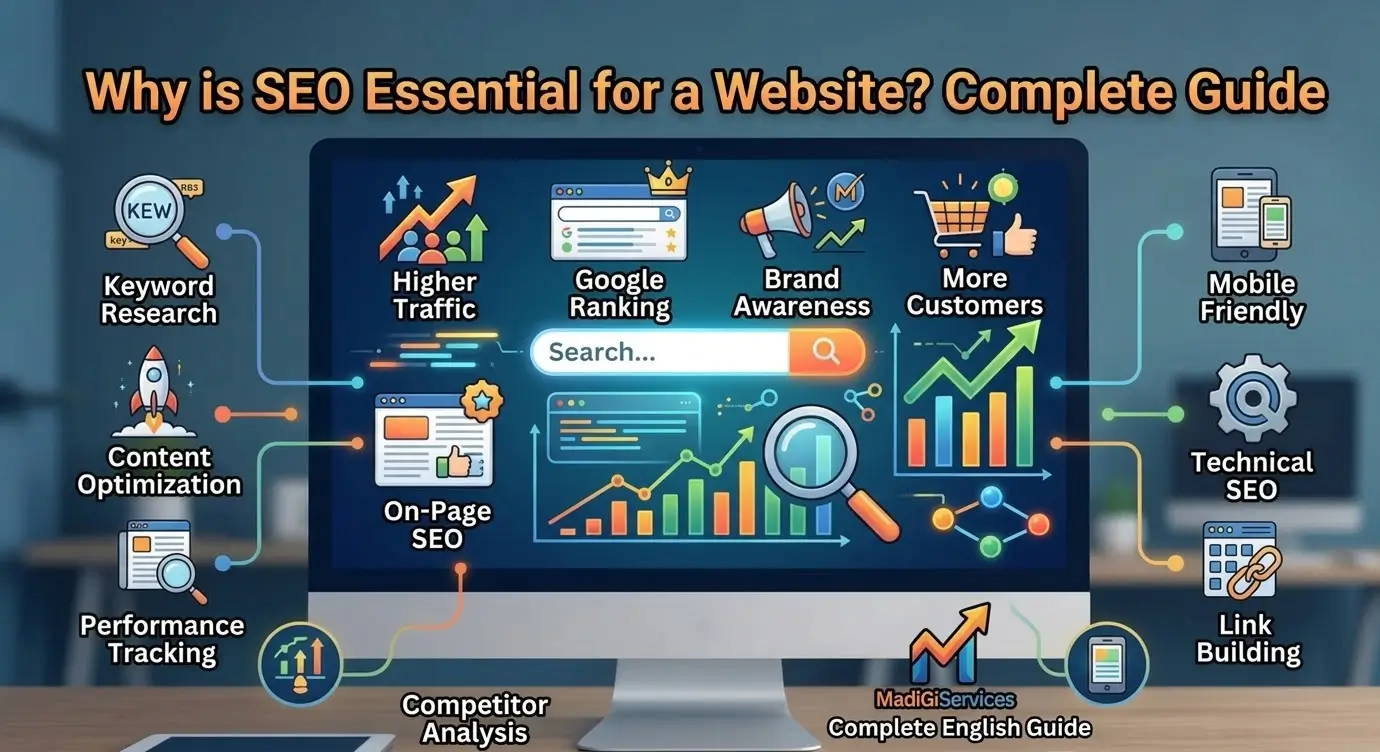
In today’s fast-paced digital ecosystem, simply building a beautifully designed website is no longer enough to guarantee online success. Millions of websites compete for user attention every second. To stand out, attract qualified leads, and grow a sustainable digital presence, your website must be easily discoverable on search engines like Google. This is precisely why Search Engine Optimization (SEO) is a fundamental pillar of modern business growth.
At MadiGiServices, we help businesses implement strategic digital solutions that transform raw web traffic into measurable revenue. In this detailed guide, we will explore why SEO is indispensable for your website, how it drives organic traffic, and why investing in search optimization delivers long-term digital authority.
1. Organic Search Drives High-Intent Traffic
Unlike traditional broad-scale advertising, search engine optimization captures users at the exact moment they are actively searching for a solution, product, or service. When potential clients type relevant queries into Google, high-ranking pages capture their immediate interest.
Organic search is consistently responsible for driving over 50% of all overall website traffic across industries. By targeting primary and long-tail keywords, SEO brings pre-qualified, high-intent visitors directly to your site, resulting in superior conversion rates compared to outbound marketing efforts.
2. Establishes Trust, Credibility, and Brand Authority
Online searchers naturally trust search engines like Google. Pages appearing on the first page of search results are implicitly viewed as more reputable, reliable, and authoritative within their respective industries.
Building organic trust requires a strong SEO foundation, including:
- High-Quality Content: Publishing informative, original content that solves user pain points.
- Technical Reliability: Securing the site with HTTPS, ensuring quick load times, and delivering error-free navigation.
- Backlink Profile: Earning authoritative inbound links from established digital platforms.
3. SEO Enhances Overall User Experience (UX)
Modern search engine algorithms prioritize user experience above all else. Google rewards websites that provide visitors with seamless, fast, and intuitive browsing experiences.
Proper SEO implementation addresses core technical factors such as mobile responsiveness, fast page load speeds (Core Web Vitals), clean site architecture, and easy-to-read headings. Consequently, optimizing your website for Google inherently makes it vastly more engaging and user-friendly for human visitors.
4. Sustainable, Cost-Effective Long-Term Results
While paid advertising campaigns (such as Google Ads or Meta Ads) generate immediate traffic, that momentum stops the moment your daily ad budget runs out. In contrast, Search Engine Optimization acts as a continuous, compounding investment.
Once your website secures top positions for primary keywords, it continues to attract qualified traffic and consistent leads without incurring per-click media costs. This makes SEO one of the most cost-effective online marketing strategies over the long run.
5. Competitive Advantage in Your Local and Global Market
Your competitors are actively investing in search optimization to capture prospective clients searching for services in your niche. Falling behind on technical SEO, content strategy, or backlink acquisition means conceding valuable market share to direct competitors.
Whether you operate locally or globally, executing a targeted SEO campaign ensures your business retains strong visibility and outranks market alternatives. Explore tailored optimization campaigns at MadiGiServices to secure your digital footprint.
Key Pillars of a Successful SEO Strategy
To maximize search engine rankings, a comprehensive SEO execution must combine three primary branches:
- On-Page SEO: Optimizing meta tags, URL structures, header hierarchies (H1–H3), keyword placement, and internal links.
- Off-Page SEO: Building external domain authority, digital PR, brand mentions, and earning quality backlinks.
- Technical SEO: Managing XML sitemaps, robots.txt directives, site architecture, canonicalization, and schema markup.
Frequently Asked Questions
How long does it take to see noticeable results from SEO?
SEO is a strategic, long-term process. While technical fixes and minor optimizations can show early results within weeks, substantial organic growth and competitive page-one rankings typically take between 3 to 6 months.
Can a website rely solely on paid ads instead of SEO?
Relying exclusively on paid search ads is expensive and unsustainable over time. Combining search engine optimization with paid marketing provides a balanced strategy that balances immediate visibility with cost-effective organic traffic.
Core Components of a Sustainable SEO Strategy
To achieve consistent page-one rankings and build domain authority, digital marketers must focus on a balanced approach that covers all key pillars of Search Engine Optimization:
- On-Page Optimization: This involves structuring content naturally around high-intent keywords, crafting engaging title tags, optimizing meta descriptions, utilizing proper H1-H6 heading hierarchies, and placing descriptive Alt text on all uploaded imagery.
- Technical SEO Infrastructure: Technical optimization ensures search engine spiders can easily crawl, index, and understand your website. Key focus areas include mobile responsiveness, fast server response times, proper XML sitemap configuration, HTTPS encryption, and fixing broken 404 links.
- Off-Page Authority Building: Search engines treat external links as votes of confidence. Acquiring natural, high-quality backlinks from reputable websites within your niche establishes topic authority and significantly improves organic competitive position.
- User Experience (UX) Signals: Modern search algorithms evaluate how real visitors interact with your web pages. High dwell times, low bounce rates, intuitive navigation layouts, and fast Core Web Vitals directly correlate with sustained ranking improvements.
Common SEO Pitfalls That Hurt Search Rankings
Avoiding critical structural and technical mistakes is just as vital as executing positive optimization strategies. Steering clear of these frequent search optimization errors will safeguard your organic search visibility:
- Keyword Stuffing: Overloading blog content with repetitive target keywords degrades user readability and violates search engine guidelines, leading to algorithmic penalties.
- Ignoring Search Intent: Creating content that fails to satisfy what the searcher is actually looking for—whether informational, navigational, or transactional—results in high bounce rates.
- Duplicate Content Issues: Publishing identical or substantially similar content across multiple pages dilutes link equity and confuses search engines about which version to index.
- Neglecting Mobile Optimization: With search engine algorithms indexing site pages primarily from a mobile perspective, websites that render poorly on mobile screens suffer severe ranking drops.
How to Measure SEO Success Effectively
Tracking the right performance metrics ensures your optimization efforts deliver measurable business value and transparent ROI over time:
- Organic Keyword Rankings: Monitor how your primary and secondary target keywords progress upward across search engine result pages (SERPs).
- Organic Search Sessions: Measure overall growth in non-paid traffic coming directly from search engine queries over monthly reporting periods.
- Conversion Rate from Search: Track the percentage of organic search visitors who complete valuable actions, such as form submissions, product purchases, or service calls.
Long-Term Benefits of Strategic SEO Investments
Unlike paid ad campaigns that stop generating traffic the moment your budget runs out, an optimized SEO strategy delivers long-term compounding growth. Consistently refining on-page elements, improving technical performance, and building search authority turns your website into a reliable customer acquisition channel for years to come.
Conclusion
Search Engine Optimization is not an optional feature—it is an essential requirement for any business serious about growing its digital authority, driving pre-qualified leads, and maximizing website revenue. By optimizing your site for search engine algorithms and user intent, you position your brand for sustainable online success.