
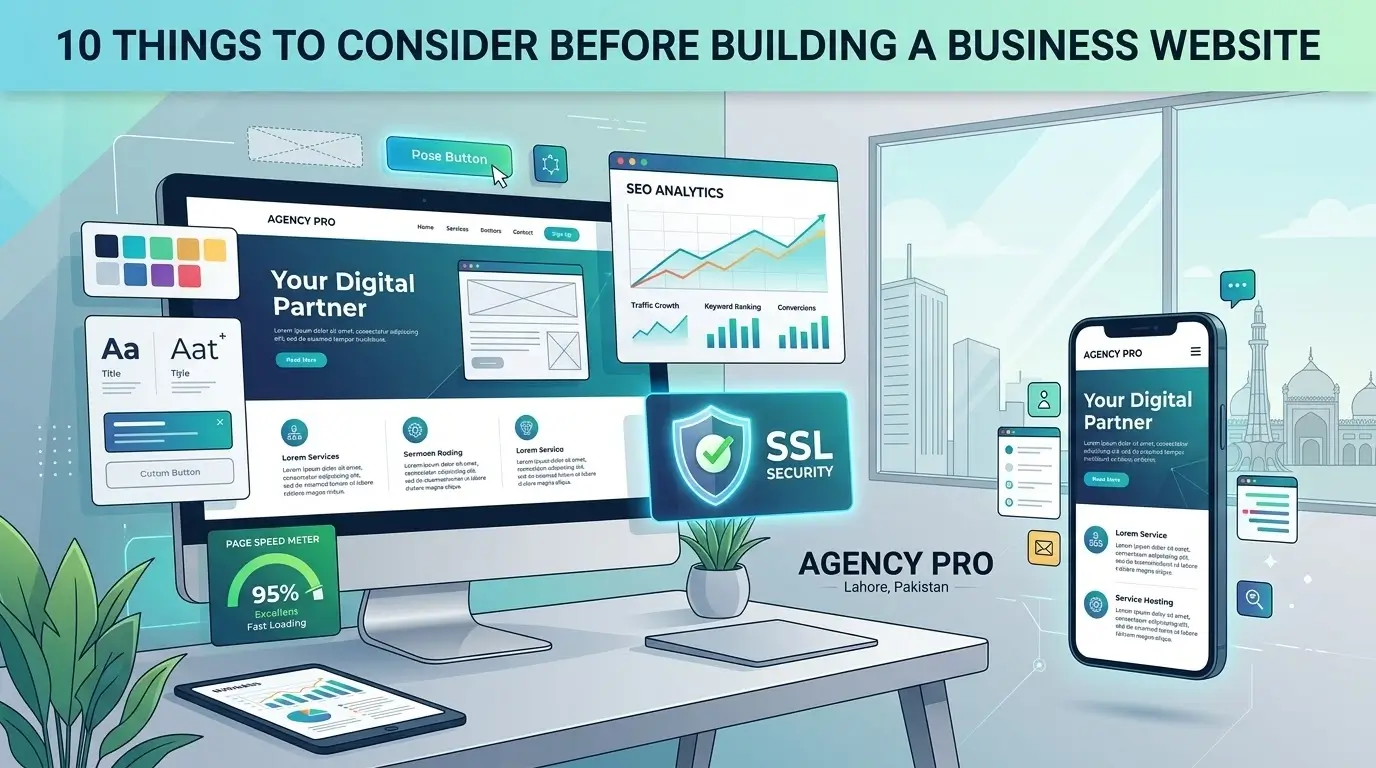
In today’s digital-first economy, a business website serves as the ultimate digital storefront, primary marketing hub, and foundational sales engine for any organization. Whether you are operating a local service agency in Lahore or scaling an e-commerce brand across Pakistan, having a high-performing website is essential for establishing commercial credibility, driving organic search traffic, and converting casual visitors into paying clients.
However, building a business website is far more than just picking a layout and placing a logo at the top. Thousands of business owners waste significant financial resources and time by jumping directly into web development without a clear strategic blueprint. In this comprehensive 1,200+ word guide, we will explore the 10 critical things you must evaluate before building a business website to ensure long-term profitability, digital security, and seamless user experiences.
Why Strategic Web Development Matters for Business Growth
A website is frequently the first interaction potential customers have with your brand. According to consumer behavior studies, online visitors form an opinion about your business within 0.05 seconds of landing on your site. A poorly planned website—plagued by slow load speeds, confusing navigation, or lack of mobile responsiveness—drives potential clients directly to your competitors.
By taking time to plan your site architecture, technical features, and content strategy beforehand, you position your business to attract qualified leads, build domain authority, and achieve maximum return on investment (ROI).
10 Critical Things to Consider Before Building a Business Website
1. Define the Primary Purpose and Core Business Goals
Before contacting a web development team or picking a platform, clearly identify what you want your website to accomplish. Are you building an e-commerce store to process direct online sales, a service agency portal to generate client lead forms, or an educational publication to build industry authority?
Every element of your site—from layout choices to page speed optimization—should align directly with your primary business objective.
2. Identify Your Target Audience Personas
Your website must be designed for your customers, not just your personal design preferences. Analyze your target buyer personas: What are their age groups, preferred communication channels, technical proficiencies, and specific pain points? Understanding your audience dictates your website’s visual branding, copywriting tone, navigation simplicity, and call-to-action (CTA) placements.
3. Choose the Right Domain Name and Secure Hosting
Your domain name is your online address. Choose a brand-aligned, easy-to-remember domain name that avoids numbers, hyphens, or overly complex spelling. Furthermore, invest in reliable, fast web hosting.
Cheap hosting providers often result in frequent server downtime, slow loading speeds, and security vulnerabilities. Opt for managed cloud hosting or dedicated WordPress hosting to guarantee maximum site uptime and high performance.
4. Plan Your Site Architecture and User Experience (UX)
Site architecture refers to how your web pages are structured and interconnected. A clean site structure allows visitors and search engine crawlers to find information effortlessly. Plan a intuitive menu navigation featuring core pages such as Home, About Us, Services/Shop, Blog, and Contact Us.
Explore structured agency website layouts and navigation frameworks at MadiGiServices to see how streamlined page flow improves conversion rates.
5. Prioritize Mobile-First Design and Responsiveness
Over 60% of global web traffic originates from mobile devices like smartphones and tablets. Search engines, including Google, employ mobile-first indexing—meaning Google predominantly uses the mobile version of your content for indexing and ranking.
Ensure your website layout automatically adapts seamlessly across screen sizes, touch controls are responsive, and text remains legible without zooming.
6. Plan a Robust SEO and Content Strategy
Building a beautiful website is useless if nobody can find it. Integrate Search Engine Optimization (SEO) into your development plan right from the start. This includes performing keyword research, setting up keyword-optimized URL slugs, writing meta tags, and establishing clean heading structures (H1, H2, H3).
Prepare high-value, comprehensive blog articles in advance to ensure your website attracts immediate organic traffic post-launch.
7. Focus on High-Speed Optimization (Core Web Vitals)
Website speed directly impacts bounce rates and conversion figures. If a website takes longer than 3 seconds to load, over 50% of visitors abandon it. Pay close attention to Google’s Core Web Vitals metrics by optimizing image sizes, utilizing modern image formats (WebP), minifying code scripts, and deploying Content Delivery Networks (CDNs).
8. Incorporate Clear Call-to-Actions (CTAs)
Every page on your website should guide visitors toward taking a specific action. Whether it is “Book a Free Consultation,” “Download Our Guide,” “WhatsApp Us,” or “Buy Now,” ensure your call-to-action buttons are visually prominent, strategically placed, and easy to use across all device types.
9. Ensure Robust Security, Data Protection, and SSL Certificates
Website security is non-negotiable for building customer trust and maintaining SEO rankings. Ensure your website installs an SSL Certificate (HTTPS protocol) to encrypt visitor data. Implement firewalls, secure admin login procedures, automated backup solutions, and clear privacy policy pages to stay compliant with international data protection standards.
10. Integrate Analytics and Tracking Tools
To evaluate performance and make data-backed marketing decisions, integrate tracking mechanisms during website development. Set up Google Analytics 4 (GA4) and Google Search Console to monitor visitor traffic, audience demographics, user behavior, and site indexation status.
For custom web development guidance, technical SEO architecture, and full-stack digital marketing strategies, review professional agency solutions at MadiGiServices.
Common Website Development Mistakes to Avoid
Protect your capital and time by steering clear of these frequent development oversights:
- Using Cluttered, Overly Complex Designs: Busy layouts with excessive animations distract users and slow down page performance. Keep design clean, modern, and focused on readability.
- Neglecting Post-Launch Maintenance: A website requires continuous maintenance, plugin updates, security audits, and content refreshes to remain secure and performant.
- Ignoring Search Engine Indexing Guidelines: Forgetting to uncheck “Discourage search engines from indexing this site” setting in WordPress after launch prevents your site from showing up on Google search results.
Frequently Asked Questions
Which content management system (CMS) is best for a business website?
WordPress is widely regarded as the industry standard, powering over 40% of all websites globally due to its exceptional flexibility, extensive SEO plugins, and scaling capabilities.
How long does it take to develop a professional business website?
A custom, well-optimized business website typically takes between 2 to 6 weeks to develop, depending on complexity, page count, custom features, and content readiness.
Conclusion
Building a high-converting business website requires careful strategic planning, technical precision, and a strong user-centric focus. By evaluating these 10 essential factors—from mobile optimization and speed to robust SEO architecture and security—you can create an online platform that drives sustainable commercial growth and market authority.