In today’s competitive online world, digital marketing has become essential for small businesses that want to attract more customers, increase sales, and build a strong online presence. Whether you run a local shop, an online store, or a service-based business, using the right digital marketing strategies can help your business reach the right audience.
In 2027, customers are increasingly using search engines, social media platforms, websites, and online reviews to find products and services. This creates new opportunities for small businesses to compete with larger companies without spending huge amounts of money on traditional advertising.
However, successful digital marketing is not just about posting on social media or running advertisements. It requires a clear plan, useful content, a professional website, and a proper understanding of your target audience.
In this guide, we will explore the best digital marketing strategies for small businesses in 2027 and explain how you can use them to grow your business online.
What Is Digital Marketing for Small Businesses?
Digital marketing is the process of promoting products, services, or brands through online channels such as search engines, social media, websites, email, and digital advertising.
For small businesses, digital marketing provides an affordable way to connect with potential customers and build brand awareness.
For example, a local restaurant can use Google Business Profile to reach nearby customers, while an online store can use SEO and social media marketing to attract shoppers from different locations.
The main purpose of digital marketing is to reach the right people, provide useful information, generate leads, and increase business growth.
Why Small Businesses Need Digital Marketing in 2027
Digital marketing is important because customer behavior continues to change. People often search online before choosing a business, comparing prices, reading reviews, or purchasing products.
Here are some important benefits of digital marketing for small businesses:
- Reach More Customers: Online marketing helps businesses connect with potential customers beyond their local area.
- Affordable Promotion: SEO, content marketing, and social media provide opportunities to promote a business with a limited budget.
- Build Brand Awareness: Regular online activity helps customers recognize and remember your brand.
- Generate More Leads: A professional website and targeted campaigns can attract people interested in your products or services.
- Measure Performance: Digital marketing tools help businesses understand website traffic, customer behavior, and campaign results.
- Compete with Larger Businesses: A small business can compete in specific markets by targeting relevant keywords and audiences.
10 Best Digital Marketing Strategies for Small Businesses in 2027
1. Search Engine Optimization (SEO)
Search Engine Optimization (SEO) is one of the most effective long-term digital marketing strategies for small businesses. It helps your website appear in relevant search engine results when people search for products, services, or information related to your business.
For example, if someone searches for “best digital marketing agency for small businesses,” a properly optimized website has an opportunity to appear in relevant search results.
To improve your website SEO:
- Research relevant keywords before writing content.
- Create helpful and original blog articles.
- Write descriptive SEO titles and meta descriptions.
- Use proper H1, H2, and H3 headings.
- Optimize images with descriptive alt text.
- Improve website loading speed and mobile usability.
- Add relevant internal and external links.
- Update old content when necessary.
Small businesses should focus on relevant keywords that match their services and customer needs rather than targeting only highly competitive search terms.
SEO takes time, but consistent improvements can help a website attract organic traffic over the long term.
2. Local SEO for Small Businesses
Local SEO is an important strategy for businesses that serve customers in specific cities, towns, or nearby areas.
When people search for services near their location, local search results can help them discover relevant businesses.
For example, a person searching for “digital marketing agency near me” may find businesses through Google’s local search results.
Here are some ways to improve local SEO:
- Create and verify your Google Business Profile.
- Add accurate business information.
- Use the correct business name, address, and phone number.
- Select relevant business categories.
- Add genuine photos of your business and services.
- Encourage satisfied customers to leave honest reviews.
- Respond professionally to customer reviews.
- Create location-specific website content.
Local SEO helps small businesses improve their visibility among customers who are actively looking for nearby products and services.
3. Social Media Marketing
Social media marketing helps small businesses connect with customers, share updates, promote products, and build relationships with their audience.
Platforms such as Facebook, Instagram, LinkedIn, TikTok, and YouTube offer different opportunities depending on your business type and target audience.
For better social media marketing results:
- Choose platforms where your target customers are active.
- Share useful and informative posts.
- Publish short videos and educational content.
- Show your products and services clearly.
- Respond to comments and messages.
- Maintain a consistent posting schedule.
- Share customer feedback with permission.
Small businesses do not need to be active on every platform. It is better to focus on one or two relevant platforms and create quality content consistently.
4. Content Marketing
Content marketing is the process of creating and sharing valuable information to attract and educate potential customers.
It is an effective strategy because customers often search for answers before making purchasing decisions.
Small businesses can use different types of content, including:
- Blog articles
- How-to guides
- Educational videos
- Product comparisons
- Frequently asked questions
- Infographics
- Case studies
For example, a digital marketing agency can publish articles about SEO, website optimization, social media marketing, and online advertising.
Useful content helps visitors understand your services and can build trust in your business.
Instead of publishing articles only to target keywords, focus on answering real questions and providing information that readers can actually use.
5. Email Marketing
Email marketing is a useful way to communicate directly with existing customers and people who have voluntarily subscribed to receive updates from your business.
It can help small businesses share information, announce new products, promote special offers, and encourage repeat purchases.
Some effective email marketing practices include:
- Build an email list through voluntary subscriptions.
- Send useful and relevant information.
- Write clear and interesting subject lines.
- Personalize messages when appropriate.
- Avoid sending too many emails.
- Provide an easy unsubscribe option.
- Track email engagement and campaign performance.
For example, an online store can send product updates and helpful shopping information to subscribers who have agreed to receive marketing emails.
Email marketing helps businesses maintain customer relationships without depending entirely on social media platforms.
6. Video Marketing
Video marketing is becoming an important part of online promotion. Videos allow businesses to explain their products, demonstrate services, and communicate with customers in an engaging way.
Small businesses can create simple videos using a smartphone without investing in expensive equipment.
Some useful video marketing ideas include:
- Product demonstrations
- Service explanations
- Frequently asked questions
- Customer testimonials with permission
- Behind-the-scenes videos
- Educational tutorials
- Short business introduction videos
You can publish videos on YouTube, Instagram Reels, Facebook, and TikTok, depending on where your audience spends time.
The most important thing is to make videos informative, clear, and relevant to your customers.
7. Paid Advertising and PPC Marketing
Paid advertising allows businesses to promote their products and services through targeted online campaigns.
Platforms such as Google Ads and Meta Ads provide advertising options that can help businesses reach specific audiences.
Google Ads can help businesses reach people who are actively searching for particular products or services. Social media advertisements can help introduce a brand to potential customers based on available targeting options.
Before starting a paid campaign, consider these steps:
- Define your advertising goal.
- Identify your target audience.
- Choose the right advertising platform.
- Set a realistic budget.
- Create clear advertising messages.
- Use a relevant landing page.
- Track conversions and campaign performance.
Small businesses should begin with a manageable budget and test different advertising approaches before increasing their spending.
Paid advertising can provide faster visibility, but results depend on targeting, competition, budget, and the quality of the offer.
8. Website Optimization and Mobile-Friendly Design
Your website is an important part of your digital marketing strategy. It acts as an online destination where potential customers can learn about your business, explore services, and contact you.
A poorly designed website can make visitors leave before taking action.
To improve your website:
- Use a clean and professional design.
- Make sure it works properly on mobile devices.
- Improve page loading speed.
- Create clear navigation menus.
- Add visible contact information.
- Use descriptive headings.
- Include clear calls to action.
- Make important information easy to find.
- Use secure HTTPS connections.
A mobile-friendly website is particularly important because many people browse the internet using smartphones.
Your website should make it easy for visitors to understand what you offer and how they can contact your business.
9. AI Tools for Digital Marketing
Artificial Intelligence (AI) tools can help small businesses save time and organize their marketing activities.
In 2027, businesses can use AI-assisted tools for research, content planning, customer support, and marketing analysis.
Some practical uses of AI include:
- Generating blog topic ideas.
- Creating social media content outlines.
- Organizing keyword research.
- Drafting email campaigns.
- Analyzing marketing performance.
- Preparing customer support responses.
- Brainstorming video content ideas.
However, AI-generated content should always be reviewed and improved before publishing.
Check facts, add your own knowledge, include useful examples, and make sure the final content genuinely helps readers.
AI should support human creativity and experience rather than replace quality research and careful content creation.
10. Track and Analyze Your Marketing Performance
One of the most important digital marketing strategies is measuring results.
Without tracking performance, it can be difficult to understand which marketing activities are bringing visitors, leads, and customers.
Small businesses can use tools such as Google Analytics 4 and Google Search Console to understand different aspects of their online performance.
Important metrics to monitor include:
- Website visitors
- Organic search traffic
- Search impressions
- Click-through rate
- Keyword performance
- Customer inquiries
- Conversion rate
- Advertising costs
- Email engagement
Review your results regularly and identify which strategies are working.
For example, if your blog articles are attracting relevant visitors, you can create more helpful content around similar topics. If a particular advertising campaign is not generating useful leads, review its audience, message, and landing page.
Tracking performance helps businesses make informed marketing decisions.
How to Create a Digital Marketing Plan for Your Small Business
Using different marketing channels without a proper plan can waste time and money. A simple digital marketing plan helps businesses stay organized and focus on their goals.
Follow these steps to create your marketing plan:
Step 1: Identify Your Target Audience
Understand who your potential customers are, what they need, and which platforms they use.
Step 2: Set Clear Business Goals
Decide what you want to achieve, such as increasing website traffic, generating leads, improving brand awareness, or increasing sales.
Step 3: Choose the Right Marketing Channels
Select the platforms that are most relevant to your audience. You can begin with SEO, social media, email marketing, or local SEO.
Step 4: Create Valuable Content
Publish helpful articles, videos, social media posts, and other content that answers customer questions.
Step 5: Set a Realistic Budget
Decide how much time and money you can invest in your marketing activities.
Step 6: Measure Your Results
Use analytics tools to review performance and improve your strategy over time.
A good marketing plan should be flexible. Review it regularly and make changes according to customer behavior and business results.
Common Digital Marketing Mistakes Small Businesses Should Avoid
Many small businesses struggle with online marketing because they make avoidable mistakes.
Here are some common mistakes to avoid:
- Targeting the wrong audience.
- Ignoring SEO and website optimization.
- Publishing low-quality or copied content.
- Posting irregularly on social media.
- Spending money on advertisements without a clear goal.
- Ignoring customer questions and feedback.
- Not tracking marketing performance.
- Using misleading advertising claims.
- Neglecting mobile website users.
- Expecting immediate results from SEO.
Avoiding these mistakes can help businesses use their marketing resources more effectively.
How Much Does Digital Marketing Cost for a Small Business?
The cost of digital marketing depends on the size of your business, marketing goals, competition, and selected channels.
Some activities, such as writing blog posts, managing social media pages, and improving basic website SEO, can be started with a relatively small budget if you have the required skills and time.
Other activities, such as professional website development, paid advertising, video production, and hiring a digital marketing agency, may require additional investment.
A practical approach is to begin with the marketing activities that are most important for your business.
For example, a local service provider may prioritize local SEO and Google Business Profile, while an online store may focus on SEO, product content, email marketing, and paid advertising.
Always evaluate marketing expenses according to the results they produce rather than choosing a strategy simply because it is popular.
Final Thoughts
Digital marketing provides small businesses with valuable opportunities to reach new customers, build brand awareness, and grow online.
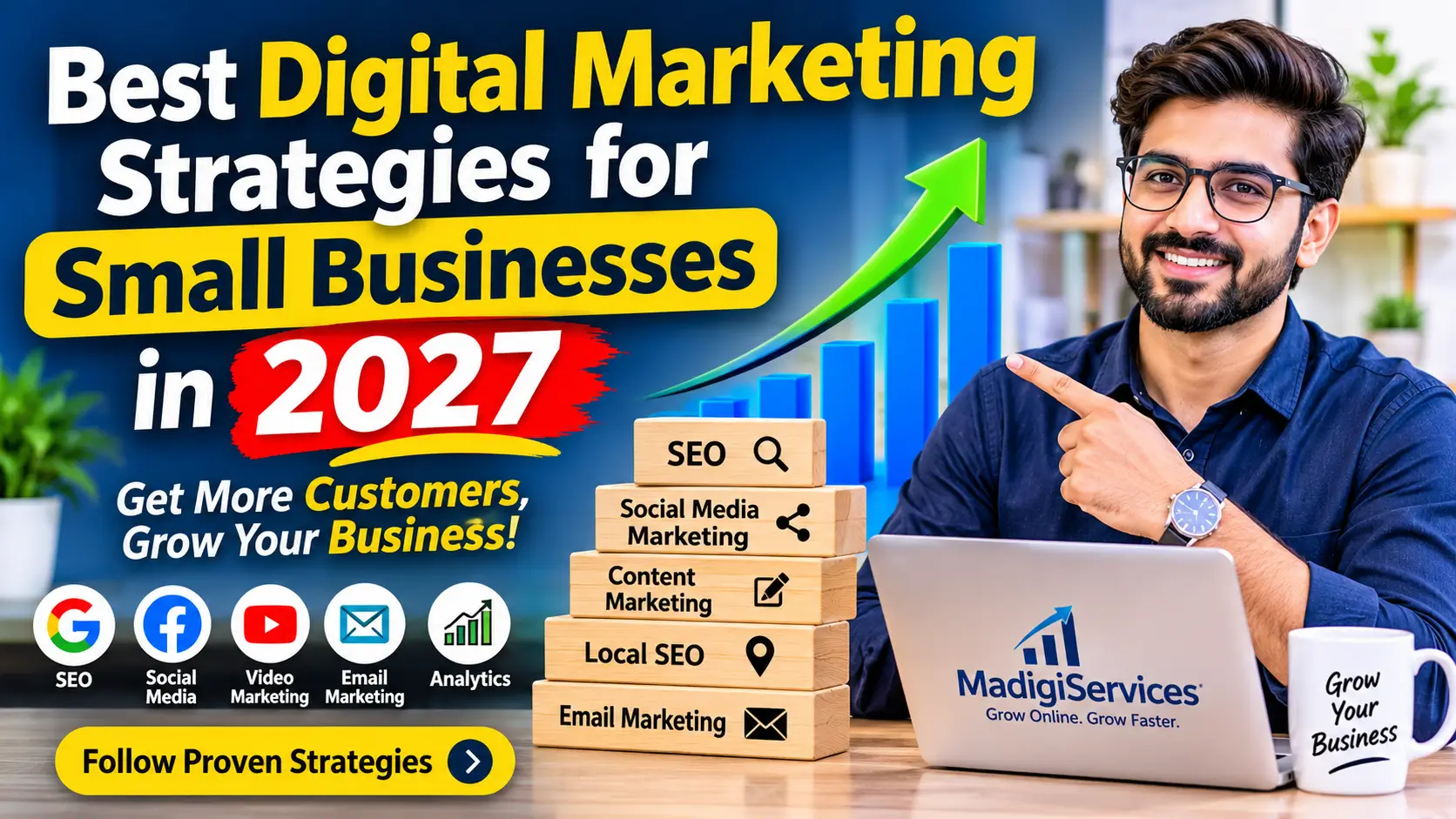
The best digital marketing strategies for small businesses in 2027 include SEO, local SEO, social media marketing, content marketing, email marketing, video marketing, paid advertising, website optimization, AI tools, and performance tracking.
However, success does not come from using every marketing channel at once. It comes from understanding your audience, choosing the right strategies, publishing useful content, and improving your marketing activities consistently.
Start with a few strategies that match your business goals and budget. As your business grows, you can expand your marketing efforts and explore additional opportunities.
With a clear plan and consistent effort, digital marketing can become a valuable part of long-term business growth.
Frequently Asked Questions (FAQs)
1. What is the best digital marketing strategy for small businesses in 2027?
SEO, local SEO, content marketing, and social media marketing are useful strategies for small businesses. The best option depends on your target audience, business type, and marketing goals.
2. How can small businesses grow online?
Small businesses can grow online by creating a professional website, improving SEO, publishing useful content, building a social media presence, and maintaining good customer relationships.
3. Is SEO important for small businesses?
Yes. SEO helps small business websites become more visible in relevant search results and can attract potential customers who are looking for their products or services.
4. Can small businesses do digital marketing with a limited budget?
Yes. Businesses can start with affordable activities such as SEO improvements, content marketing, social media management, and email marketing. Paid advertising can be added when the budget allows.
5. How long does digital marketing take to show results?
Results depend on the marketing channel, competition, budget, and strategy. Paid advertising may generate visibility quickly, while SEO and content marketing generally require consistent effort over a longer period.
6. Why should small businesses hire a digital marketing agency?
A digital marketing agency can help businesses plan and manage SEO, social media, content creation, website optimization, and advertising campaigns. The right agency can also help measure performance and improve marketing activities.
7. Which digital marketing tools are useful for small businesses?
Useful tools include Google Analytics 4, Google Search Console, Google Business Profile, email marketing platforms, social media management tools, and AI-assisted content tools.
Conclusion: Small businesses that focus on their customers, provide useful information, and consistently improve their online presence can build a stronger digital marketing strategy in 2027.