In the world of Search Engine Optimization (SEO), achieving high search engine rankings requires a clear understanding of how Google evaluates web pages. Whether you manage an e-commerce platform, run a local business in Lahore, or provide digital marketing solutions, mastering both On-Page SEO and Off-Page SEO is essential for sustainable online success.
Many business owners wonder which strategy matters more or how they differ. In this comprehensive guide, we will break down the fundamental differences between On-Page SEO and Off-Page SEO, explain their individual components, and demonstrate how leveraging both creates a dominant search presence.
Understanding the Core Distinction
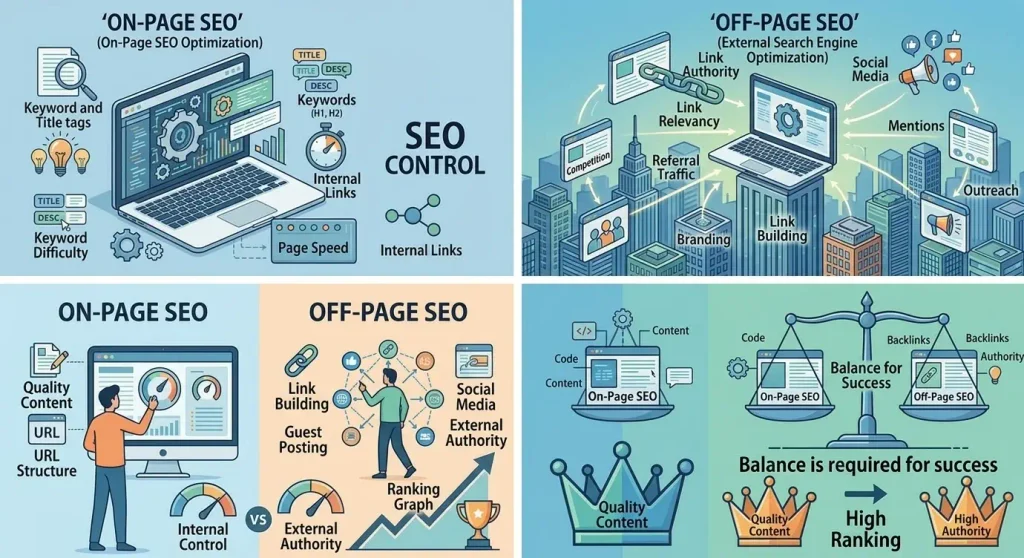
At a high level, the distinction between On-Page and Off-Page SEO comes down to location and control:
- On-Page SEO: Encompasses every optimization measure you take directly within your website to improve readability, user experience, and search engine crawling. You have 100% control over On-Page elements.
- Off-Page SEO: Encompasses all activities taking place outside of your website to build brand authority, trust, and digital popularity. Off-Page SEO relies on external relationships, outreach, and third-party endorsements.
Think of your website as a physical store. On-Page SEO is like setting up clean aisles, attractive product displays, and clear signage inside your shop. Off-Page SEO is like word-of-mouth recommendations, newspaper features, and local reviews that bring customers to your front door.
What Is On-Page SEO? (Deep Dive)
On-Page SEO focuses on optimizing the structural and textual components of individual web pages. Search algorithms inspect On-Page signals to determine if your content directly answers user search queries.
1. High-Quality, Search-Intent Focused Content
Content is the foundation of On-Page SEO. Google prioritizes content that provides original insights, thorough answers, and clear solutions. Your content must solve the reader’s problem better than any competing page on the internet.
2. Strategic Keyword Placement
Keywords signal topical relevance to search crawlers. Naturally place your primary keyword and long-tail secondary terms in key areas:
- The main page title (H1) and subheadings (H2, H3).
- The first 100 words of your introduction.
- Naturally throughout the body text without forcing or “keyword stuffing.”
- The page URL slug and image alt text tags.
3. Heading Tags and HTML Structure
Using structural heading tags (H1, H2, H3, H4) breaks long articles into digestible sections. This improves readability for human visitors and allows search engine bots to parse your content hierarchy effectively.
4. Internal Linking Architecture
Internal links connect different pages on your website. Linking related blog posts and core service pages helps distribute page authority across your domain and keeps users engaged longer. For example, exploring agency services at MadiGiServices demonstrates how internal linking reinforces site navigation.
5. Image Optimization and Technical UX
Optimizing image file sizes ensures fast page loading speeds. Including descriptive alt text ensures accessibility for screen readers and allows your images to rank in Google Image search results.
What Is Off-Page SEO? (Deep Dive)
Off-Page SEO measures how the digital world perceives your website. Even if your On-Page SEO is flawless, search engines hesitate to rank pages highly unless external websites validate your domain’s credibility.
1. High-Quality Backlink Acquisition
Backlinks remain one of Google’s top ranking signals. When an external website links back to your domain, search engines interpret that link as a “vote of confidence.” However, quality matters far more than quantity:
- Relevance: Links from niche-related websites hold significantly higher value than random links.
- Authority: Securing links from established, high-traffic publications drives massive ranking boosts.
- Natural Link Growth: Avoid buying link packages, as unnatural link patterns trigger search penalties.
2. Guest Blogging and Content Outreach
Contributing expert guest articles to reputable industry publications is an effective, ethical way to earn DoFollow backlinks while showcasing your industry expertise to new audiences.
3. Local Citations and Google Business Profile
For local businesses in Pakistan, setting up a Google Business Profile and registering on regional business directories provides vital local signals that boost map pack rankings.
4. Social Media Engagement and Brand Mentions
While social media shares do not directly pass link juice, actively sharing content across Facebook, LinkedIn, and Instagram drives referral traffic, increases brand searches, and generates organic backlink opportunities.
On-Page vs. Off-Page SEO: Key Comparison
To summarize how these two disciplines compare, review the primary differences below:
- Focus Area: On-Page optimizes site content and structure; Off-Page optimizes brand reputation and backlinks.
- Level of Control: On-Page is fully controlled by you; Off-Page depends on third-party site owners and audience perception.
- Primary Execution: On-Page involves writing, formatting, and coding; Off-Page involves outreach, networking, and PR.
- Timeframe: On-Page changes yield immediate technical fixes; Off-Page builds domain authority steadily over months.
Which One Should You Focus On First?
Always prioritize On-Page SEO first. Trying to build backlinks (Off-Page) for a poorly structured website with thin content is ineffective. Once your site features comprehensive, well-designed pages, turn your attention to building high-quality backlinks and growing external brand presence.
Frequently Asked Questions
Can I rank on Google with On-Page SEO alone?
For low-competition local search queries, strong On-Page SEO can be enough to secure top rankings. However, competitive keywords always require a solid backlink profile.
Is technical SEO part of On-Page SEO?
Yes, technical elements like site speed, mobile responsiveness, XML sitemaps, and SSL security fall under the broader umbrella of On-Page and site-wide optimization.
- Optimizing Title Tags and Meta Descriptions: Crafting compelling title tags and meta descriptions with primary keywords significantly improves click-through rates from search engine result pages.
- Leveraging Strategic Heading Hierarchies: Using structured H1, H2, and H3 tags correctly organizes content readability for both users and search engine crawlers.
- Enhancing Content Readability and Formatting: Breaking down dense text blocks with bullet points, short paragraphs, and relevant images reduces bounce rates and increases user engagement.
- Strategic Internal Linking for Authority Flow: Linking relevant internal pages together passes link equity throughout your website and helps search engine bots discover new content faster.
- Optimizing Image Alt Text and File Names: Adding descriptive alt attributes and concise file names containing target keywords makes images accessible and improves overall contextual relevance.
- Improving User Intent Alignment: Ensuring that your content directly answers what searchers are looking for reduces bounce rates and boosts long-term ranking stability on search engine results pages.
Conclusion
On-Page and Off-Page SEO are two sides of the same coin. By combining optimized content and clean site structure with ethical link building and local marketing, your website can build lasting search engine dominance.