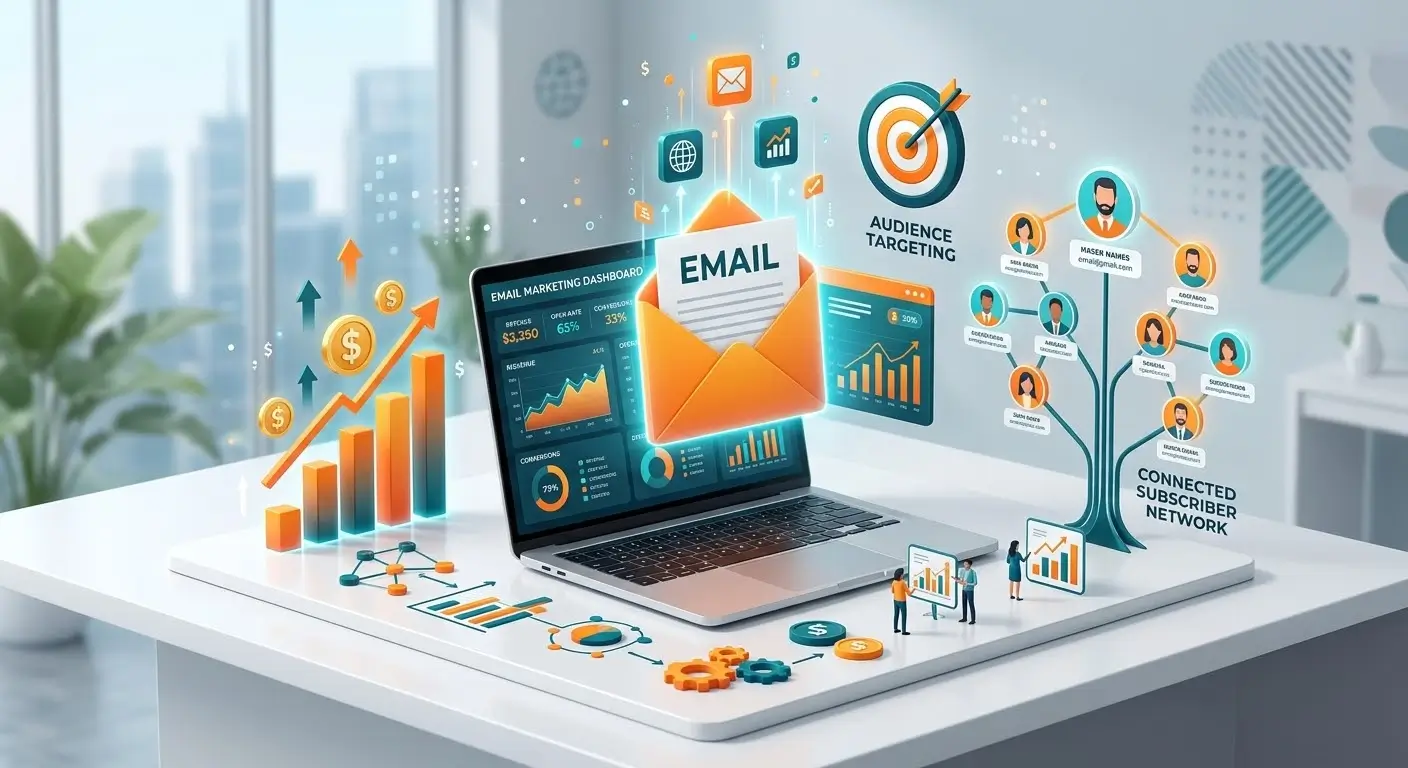
In today’s fast-paced digital ecosystem, businesses face continuous challenges in attracting, engaging, and retaining targeted customers. From local service agencies in Lahore to expanding e-commerce store brands across Pakistan, establishing direct and reliable communication channels with buyers is essential for long-term growth. Among various marketing tactics, email marketing remains one of the most cost-effective, dependable, and revenue-generating strategies available.
While social media trends fluctuate and search engine algorithms update continuously, email marketing gives your business direct control over its audience communication. In this comprehensive guide, we will explore why email marketing is critical for business success, its core benefits, and how to execute a high-converting email strategy tailored for sustainable brand growth.
Why Email Marketing Is Vital for Modern Businesses
Email marketing is the targeted practice of sending tailored, valuable emails to a subscriber list of prospects and existing clients. Unlike commercial social media platforms where organic reach can decline unexpectedly, your email subscriber list represents a private asset owned entirely by your business.
Industry research shows that email marketing generates an average Return on Investment (ROI) of $36 to $42 for every single dollar spent. This incredible efficiency makes email marketing indispensable for small businesses, agencies, and large corporate enterprises alike.
Top Business Benefits of Email Marketing
Implementing an organized email marketing strategy provides distinct commercial advantages over relying solely on paid ad campaigns or organic social media posts.
1. Direct and Personal Communication Channel
Email provides a personal, 1-on-1 environment directly inside your customer’s primary inbox. Unlike public social media feeds filled with competing advertisements, email marketing lets you deliver customized messages, personalized product recommendations, and exclusive promotional offers tailored specifically to individual buyer preferences.
2. Unmatched Return on Investment (ROI) and Low Operating Costs
Running paid ad campaigns on platforms like Meta or Google requires continuous financial investment. Once ad budgets stop, client traffic stops immediately. In contrast, building an email newsletter list allows you to market new product launches and agency services repeatedly at virtually zero incremental cost.
3. Full Ownership of Your Customer Data
When you build a social media following, your reach remains subject to platform rules, policy shifts, and fee adjustments. If a platform account faces technical restrictions, access to your entire audience vanishes overnight. Your email list is a independent, portable database owned entirely by your company.
4. Advanced Audience Segmentation and Higher Conversion Rates
Modern email marketing platforms allow businesses to segment subscriber bases according to specific buyer actions, geographic locations, and past purchase histories. Sending highly targeted emails to segmented audiences dramatically improves click-through rates and generates significantly higher conversion rates compared to generic broadcasts.
At MadiGiServices, we emphasize combining strategic content planning with technical audience segmentations to maximize conversion rates across digital touchpoints.
Key Types of Business Marketing Emails
To maximize engagement without overwhelming your audience, structure your email campaigns around distinct user journeys and goals:
- Welcome Series Emails: Automatically delivered to new subscribers to introduce your brand values, highlight core service offerings, and build immediate trust.
- Educational Newsletters: Regularly distributed articles, industry tips, and strategic guides that solve customer problems and maintain brand authority.
- Promotional Campaigns: Targeted discount offers, seasonal sales notifications, and product launch announcements designed to drive immediate revenue.
- Transactional & Automated Emails: Order confirmation emails, shipping updates, and automated abandoned cart reminders that recover lost sales.
Step-by-Step Guide to Building a Successful Email Marketing Strategy
To establish a reliable email marketing framework for your business, follow these proven execution steps:
1. Select an Industry-Standard Email Platform
Choose an enterprise-level email service provider such as Mailchimp, Brevo, ActiveCampaign, or ConvertKit. These tools provide essential template builders, automated campaign workflows, detailed analytics tracking, and strict spam compliance features.
2. Create High-Value Lead Magnets to Grow Your List
People rarely share personal email addresses without a compelling reason. Offer high-value “lead magnets”—such as a free downloadable PDF checklist, a special discount code, or an exclusive mini-course—to incentivize visitors to sign up voluntarily.
3. Craft Compelling Subject Lines
The subject line determines whether a subscriber opens your email or deletes it. Keep subject lines concise, engaging, and relevant. Avoid clickbait tactics or spam trigger words that harm inbox deliverability ratings.
4. Optimize for Mobile Readability
Over 60% of emails globally are opened on mobile devices. Ensure your email layouts use responsive single-column templates, clear legible fonts, and large, easy-to-click call-to-action (CTA) buttons.
To see how optimized digital experiences convert incoming visitors, review the service agency frameworks at MadiGiServices.
Common Email Marketing Mistakes to Avoid
Protect your brand reputation and inbox placement rate by steering clear of these common pitfalls:
- Buying Email Lists: Purchasing third-party contact lists damages sender reputation, leads to high bounce rates, and violates strict global anti-spam regulations (GDPR/CAN-SPAM).
- Over-Sending Emails: Bombarding subscribers with excessive daily promotions causes high unsubscribe rates and spam complaints.
- Neglecting Analytics Performance: Failing to monitor key performance indicators (KPIs) like open rates, click-through rates, and unsubscribes prevents continuous campaign optimization.
- Ignoring Unsubscribe Links: Always provide a visible, easy 1-click unsubscribe option at the bottom of every commercial email to maintain compliance and user respect.
Frequently Asked Questions
Why is email marketing better than social media marketing?
While social media builds general brand awareness, email marketing offers direct inbox access, higher average conversion rates, and full ownership of your client database without algorithmic restrictions.
How often should a business send marketing emails?
For most businesses, sending 1 to 2 valuable email newsletters per week maintains active engagement without overwhelming subscriber inboxes.
Is email marketing suitable for small local businesses in Pakistan?
Yes, local Pakistani service agencies, e-commerce shops, and consultancies can leverage email marketing to build customer loyalty, share updates, and convert one-time visitors into repeat long-term clients.
Key Email Marketing Metrics You Should Track
To maximize the performance of your campaigns, simply sending messages is not enough. You must consistently measure performance using key metrics to understand how your audience interacts with your brand.
- Open Rate: This percentage indicates how many recipients opened your email. A high open rate reflects compelling, relevant subject lines and strong trust with your readership.
- Click-Through Rate (CTR): CTR tracks the proportion of readers who clicked on a link or Call-To-Action (CTA) inside your email, directly showing how persuasive your content is.
- Conversion Rate: This measures the percentage of recipients who completed a target action, such as purchasing a product, filling out a contact form, or registering for a service.
- Bounce Rate: The percentage of emails that could not be delivered successfully. Keeping this low is crucial to protect your sender reputation and maintain deliverability.
Essential Best Practices for Email Marketing Success
To ensure long-term profitability and sustainable subscriber growth, incorporate these foundational best practices into your strategy:
- Segment Your Email List: Avoid sending generic blasts to everyone. Group your subscribers based on interest, buying history, or demographics to deliver highly personalized content.
- Optimize for Mobile Devices: Over half of all email interactions happen on smartphones. Use responsive, clean email templates that render effortlessly across all screen sizes.
- Craft Clear and Compelling CTAs: Every single email should feature one focused Call-To-Action that guides readers smoothly toward the next step without causing decision fatigue.
- A/B Test Your Campaigns: Continuously test different subject lines, CTA buttons, send times, and design layouts to discover what yields the highest engagement rates.
Conclusion
Email marketing remains one of the most resilient, high-converting digital channels available to modern businesses. By focusing on permission-based list growth, segmented audience delivery, and helpful content, your company can build lasting customer trust and drive consistent commercial growth,